Roof Replacement Cost in Ohio (2026): Prices, Permits and Local Risks
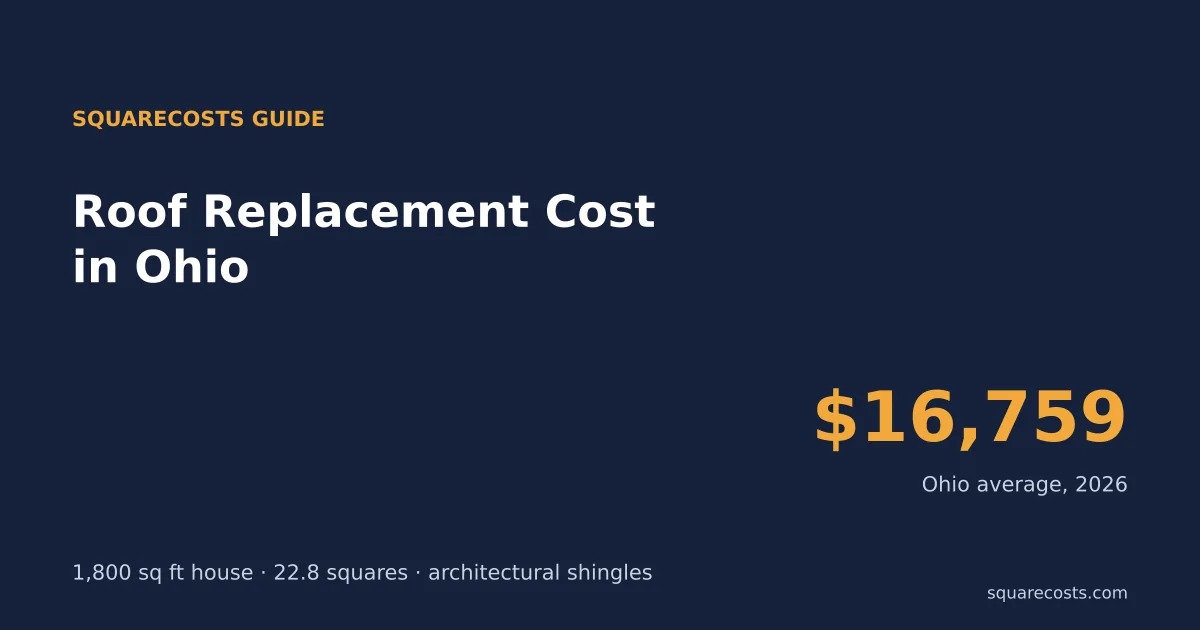
In 2026 the typical roof replacement cost in Ohio is $16,759 ($7 per square foot of roof), with most real quotes landing between $14,748 and $19,273. We priced a standard project (an 1,800 sq ft house with about 2,277 sq ft of roof (22.8 squares), one old layer torn off and architectural shingles) line by line using Ohio labor rates and local material costs.
Ohio ranks 24th of 51 states for this project, close to the middle of the pack, and sits 0% below the national average of $16,823. This guide walks through what drives that number, line by line, and what to check locally before you sign a contract.
Ohio at a glance (November 2026)
- Ohio average: $16,759 (about $7 per square foot of roof)
- Typical range: $14,748 – $19,273
- U.S. average: $16,823 (+0% for Ohio)
- Rank: 24 of 51 states (1 = most expensive)
- Labor: about 86 hours, $4,678 before markup
Roof replacement cost in Ohio by size
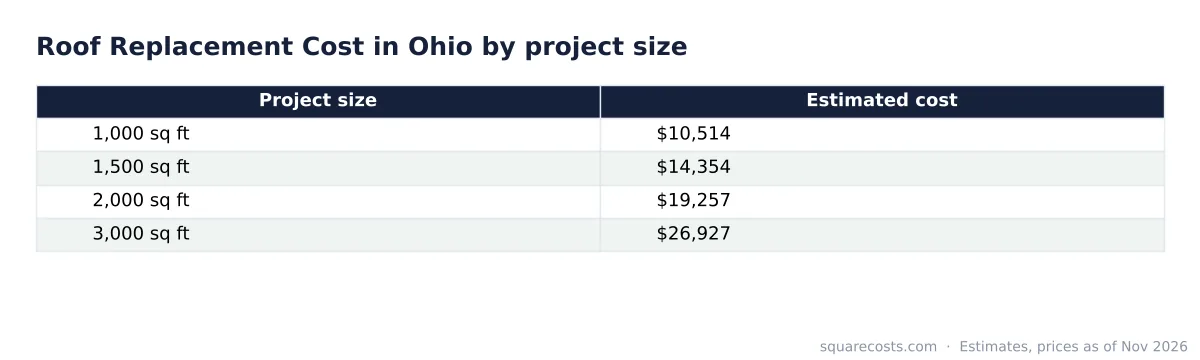
| Project size | Estimated cost in Ohio |
|---|---|
| 1,000 sq ft | $10,514 |
| 1,500 sq ft | $14,354 |
| 2,000 sq ft | $19,257 |
| 3,000 sq ft | $26,927 |
Size matters too: from 1,000 sq ft ($10,514) to 3,000 sq ft ($26,927). The cost per unit falls as the project grows, because permits, setup and fixed items are spread over more area.
Change the size, finish level and options to get your own itemized estimate for Ohio, with a PDF you can show contractors.
Ohio vs. nearby states
Ohio ranks 24th of 51 states for roof replacement cost (1 = most expensive) — in the middle. Prices in neighboring states for the same project: Indiana ($16,896, +1%), Kentucky ($15,802, -6%), Michigan ($17,152, +2%), Pennsylvania ($17,040, +2%) and West Virginia ($16,042, -4%). Kentucky and West Virginia are cheaper, while Indiana, Michigan and Pennsylvania cost more.
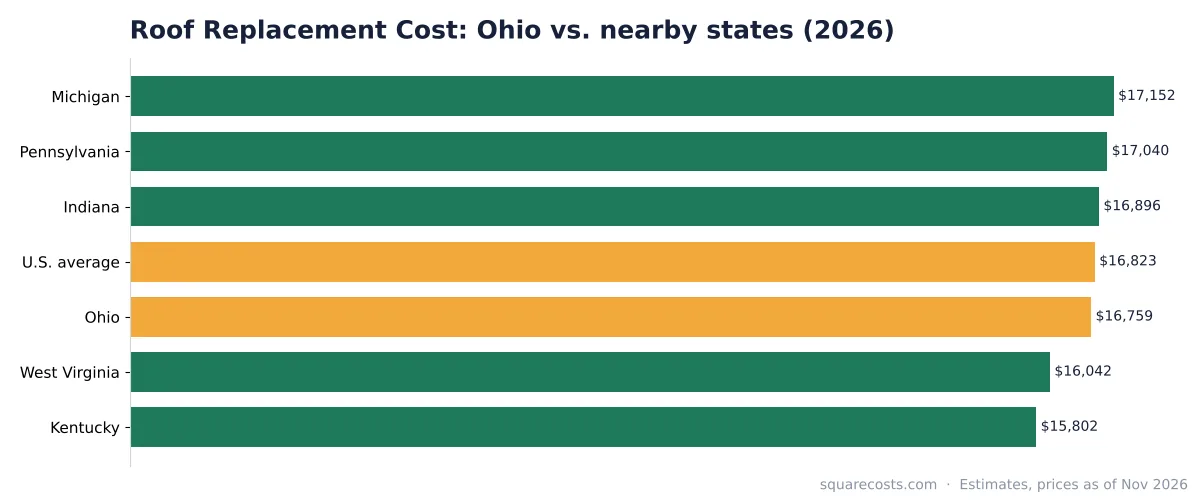
Most of the gap is labor. A carpenter in Ohio earns about $30.09 an hour on average, and contractors bill roughly double that once payroll taxes, insurance, tools and travel are included. Sales tax on materials is 5.75% at the state level, and local add-ons can raise it.
Where the money goes
Before contingency, overhead and tax, the direct cost in Ohio splits into materials ($5,624), labor ($4,678 for about 86 hours) and equipment, disposal and permits ($2,691). By work package:
- Roofing: $11,861 (91%)
- Permits & setup: $753 (6%)
- Roof decking: $379 (3%)
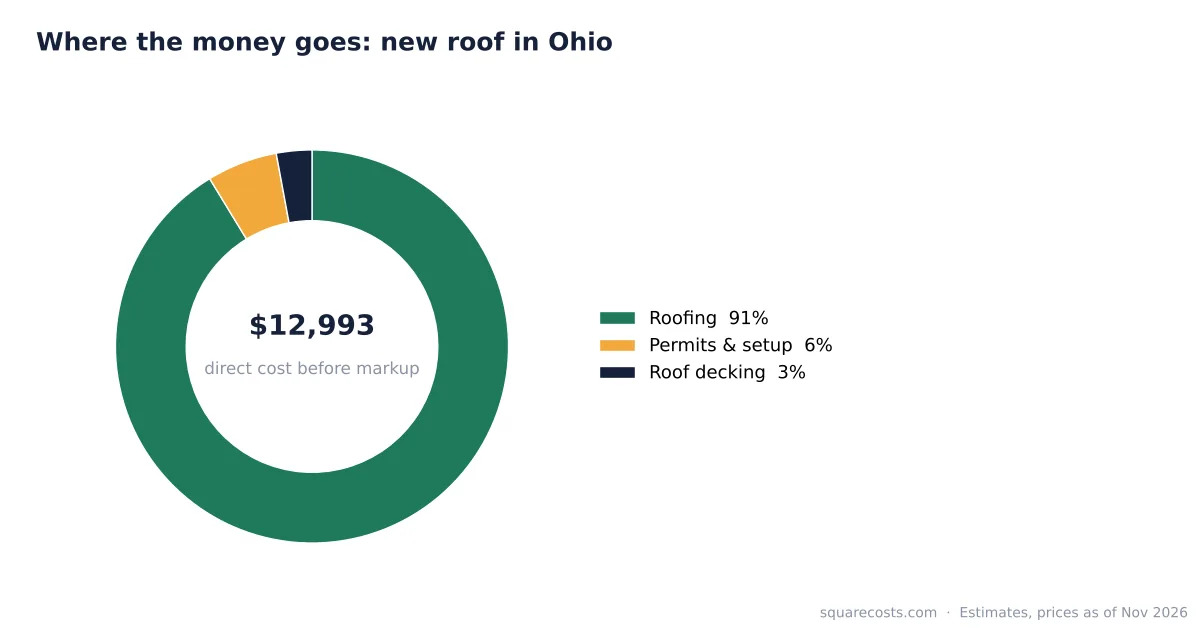
The final price adds 10% contingency for surprises, 15% contractor overhead and profit, and sales tax on materials. A quote far below the estimate usually leaves something out, so ask for an itemized scope in writing.
Labor rates in Ohio
These are the trades and hours behind the estimate. The wage is the state average from the BLS Occupational Employment and Wage Statistics; the installed rate is what a contractor typically bills per hour.
| Trade | Hours | Avg. wage / hour | Installed rate / hour |
|---|---|---|---|
| Roofer | 61 | $26.76 | $53.52 |
| Construction laborer | 25 | $28.03 | $56.06 |
Local factors that change the roof replacement cost in Ohio
A few local conditions add work in Ohio that a national average hides:
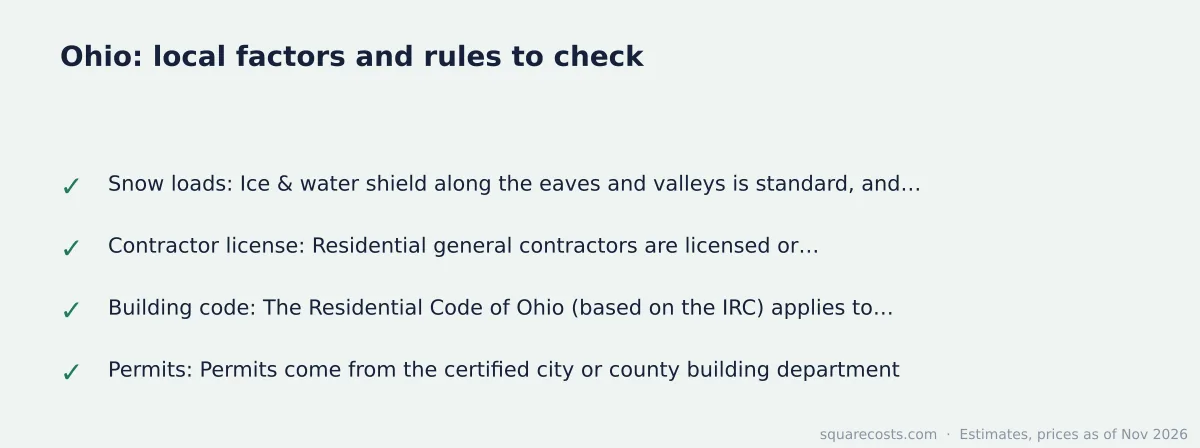
- Snow loads. Ice & water shield along the eaves and valleys is standard, and the roof structure must carry the local ground snow load.
Permits and contractor licensing in Ohio
- Contractor license. Residential general contractors are licensed or registered locally (city or county). Commercial HVAC, electrical, plumbing and hydronics contractors are licensed by the Ohio Construction Industry Licensing Board.
- Building code. The Residential Code of Ohio (based on the IRC) applies to one-, two- and three-family homes.
- Permits. Permits come from the certified city or county building department; some rural areas have no residential inspections.
Rules change, and cities often add their own requirements. Confirm with your local building department before work starts, and keep copies of the permit and final inspection: buyers, lenders and insurers ask for them.
What the estimate includes and leaves out
The roof replacement cost in Ohio in this guide covers:
- Tear-off of one layer of old shingles and disposal
- Synthetic underlayment, ice and water shield at eaves and valleys
- New drip edge, pipe boots and flashing
- Architectural asphalt shingles and ridge vents
- Dumpster, permit and cleanup
- Allowance for replacing a few sheets of rotten decking
- 10% contingency, 15% overhead and profit, sales tax on materials
Budget separately for:
- Replacing large areas of rotten decking or rafters
- Removing a second or third layer of old roofing
- New gutters, skylights or chimney rebuilds
- Upgrades to metal, tile or slate
- Attic ventilation or insulation upgrades beyond the basics
How to lower the cost
- Replace gutters at the same time only if they are damaged; it is cheaper when the crew is already there.
- Do not choose the lowest bid if it skips permits or decking replacement.
- Get the roof inspected before storm season and fix small leaks before they reach the decking.
- Book in the shoulder season when roofers are less busy.
- Ask for the same written scope from every roofer: layers removed, underlayment, ice and water shield, flashing, decking allowance.
- Check manufacturer certification; it often unlocks a longer warranty at no extra cost.
Before hiring, compare at least three written quotes against your itemized Ohio estimate. Ask each contractor for a license number, proof of liability insurance and workers’ compensation, and a payment schedule tied to finished work, not dates.
Storms, insurance and warranties
Most homeowner policies pay for a new roof only when storm damage is sudden and documented. If a hail or wind event hits your area, get a free inspection, photograph the damage and call the insurer before signing with a roofer. A roofer should never ask you to sign over your claim or waive your deductible.
Shingle warranties come in two parts: the manufacturer covers the material (often 25 years to lifetime, prorated), and the roofer covers workmanship (often 2–10 years). Certified installers can usually offer a longer system warranty. Ask for both in writing, and register the warranty after the job.
Timeline and planning
Most asphalt shingle roofs on a typical house take one to three days. Permits, material delivery and weather add a few days to a few weeks, and after a big storm the wait for a crew can be much longer.
For more context, see the roof replacement cost calculator, all Ohio construction and remodeling costs, and the roof replacement cost in every state. Our construction cost index shows how Ohio compares across 23 project types.
How we calculate these numbers. Every figure on this page comes from the SquareCosts calculators, which price each project line by line: materials adjusted for regional prices and inflation, labor hours multiplied by local trade wages, equipment, disposal and permits, then 10% contingency, 15% contractor overhead and profit, and sales tax on materials. Wages come from government statistics agencies and are re-checked every month. The Ohio estimate assumes an 1,800 sq ft house with about 2,277 sq ft of roof (22.8 squares), one old layer torn off and architectural shingles. See our data sources for details. These are planning estimates, not quotes: always get written quotes from licensed contractors.
Frequently asked questions
How much does a new roof cost in Ohio in 2026?
About $16,759 for the standard project (an 1,800 sq ft house with about 2,277 sq ft of roof (22.8 squares), one old layer torn off and architectural shingles). Most quotes fall between $14,748 and $19,273.
Why is Ohio less expensive than the U.S. average?
Ohio is 0% below the national average of $16,823. The difference comes mainly from local wages (a carpenter earns about $30.09 per hour), regional material prices and the 5.75% sales tax on materials.
Do I need a licensed contractor in Ohio?
Residential general contractors are licensed or registered locally (city or county). Commercial HVAC, electrical, plumbing and hydronics contractors are licensed by the Ohio Construction Industry Licensing Board.
Do I need a permit in Ohio?
Permits come from the certified city or county building department; some rural areas have no residential inspections. Ask the contractor to pull the permit in their own name.
How long does the project take?
Most asphalt shingle roofs on a typical house take one to three days. Permits, material delivery and weather add a few days to a few weeks, and after a big storm the wait for a crew can be much longer.