Cost to Build a Pool in California (2026): Inground Pool Prices Explained
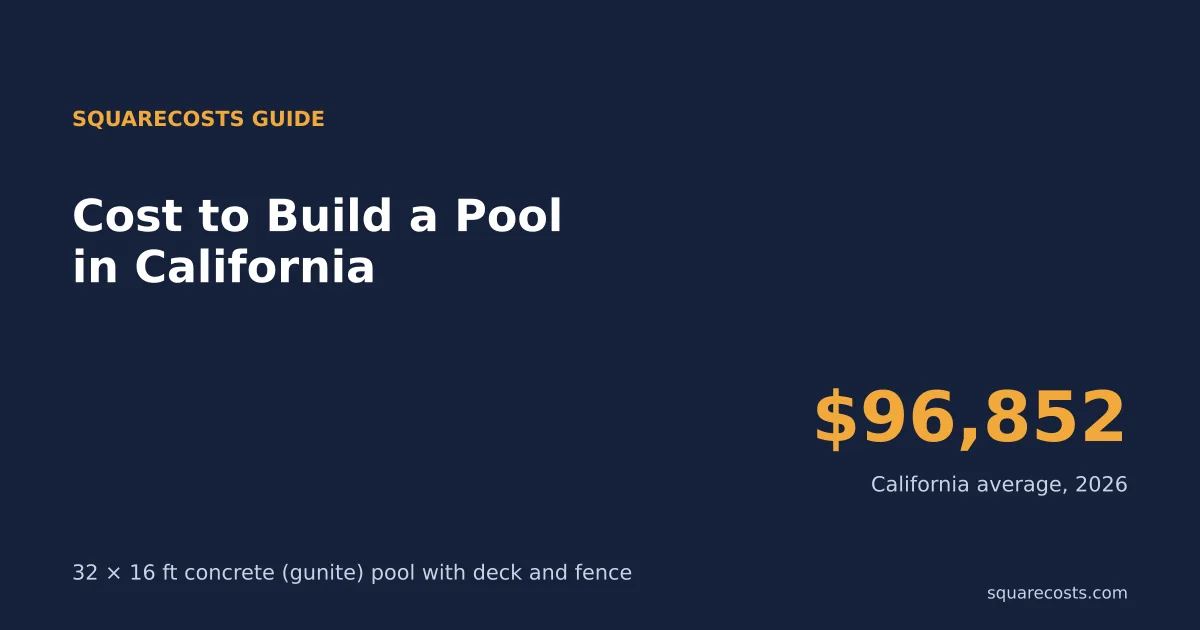
The cost to build a pool in California averages $103,034 in 2026, or about $201 per square foot of water surface. That figure prices one standard project (a 32 × 16 ft concrete (gunite) pool, about 19,000 gallons, with a concrete deck and safety fence) with current California wages, material prices and sales tax. Most homeowners will see quotes between $90,670 and $118,489.
California ranks 7th of 51 states for this project, one of the more expensive states, and sits 13% above the national average of $91,082. This guide walks through what drives that number, line by line, and what to check locally before you sign a contract.
California at a glance (November 2026)
- California average: $103,034 (about $201 per square foot of water surface)
- Typical range: $90,670 – $118,489
- U.S. average: $91,082 (+13% for California)
- Rank: 7 of 51 states (1 = most expensive)
- Labor: about 340 hours, $24,252 before markup
Cost to build a pool in California by size
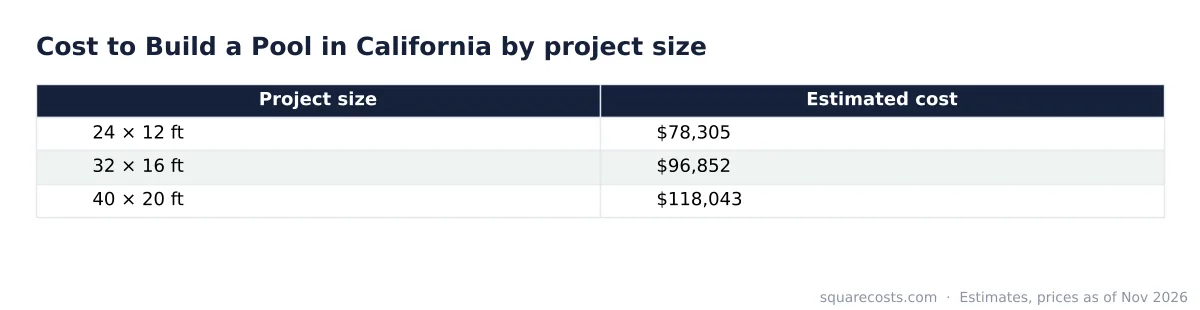
| Project size | Estimated cost in California |
|---|---|
| 24 × 12 ft | $83,303 |
| 32 × 16 ft | $103,034 |
| 40 × 20 ft | $125,577 |
Size matters too: from 24 × 12 ft ($83,303) to 40 × 20 ft ($125,577). The cost per unit falls as the project grows, because permits, setup and fixed items are spread over more area.
Change the size, finish level and options to get your own itemized estimate for California, with a PDF you can show contractors.
California vs. nearby states
California ranks 7th of 51 states for swimming pool cost (1 = most expensive) — among the most expensive. Prices in neighboring states for the same project: Arizona ($88,992, -14%), Nevada ($94,196, -9%) and Oregon ($96,771, -6%). Arizona, Nevada and Oregon are cheaper.
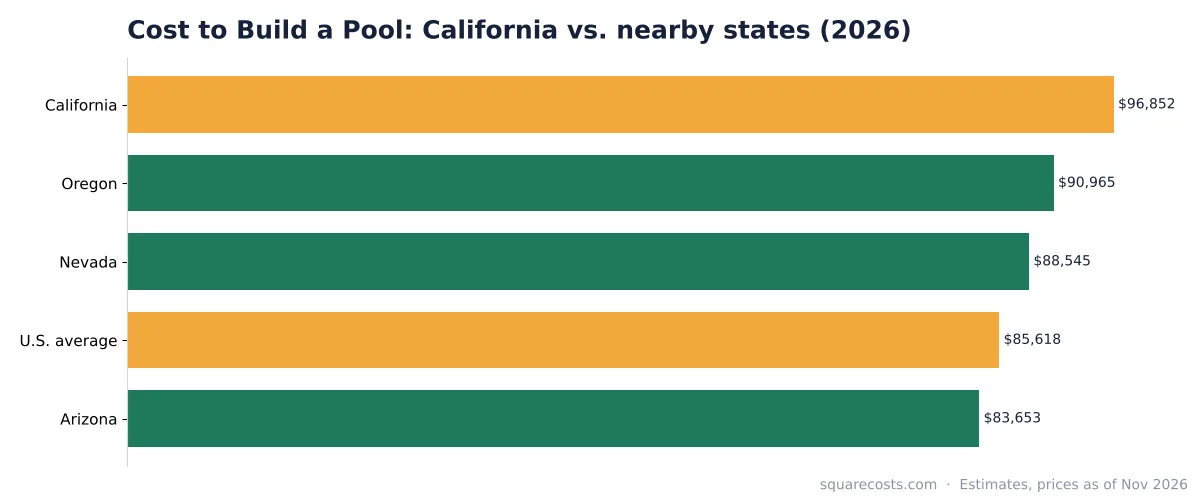
Wages explain most of the difference. The average carpenter wage in California is about $37.89 an hour, and the installed rate a contractor charges is roughly twice the wage. Sales tax on materials is 7.25% at the state level, and local add-ons can raise it.
Where the money goes
Before contingency, overhead and tax, the direct cost in California splits into materials ($43,097), labor ($24,252 for about 340 hours) and equipment, disposal and permits ($11,631). By work package:
- Pool structure: $39,060 (49%)
- Design, permits & excavation: $12,944 (16%)
- Plumbing & equipment: $9,113 (12%)
- Safety fence & gate: $6,791 (9%)
- Pool deck: $6,138 (8%)
- Electrical: $3,432 (4%)
- Start-up: $1,500 (2%)
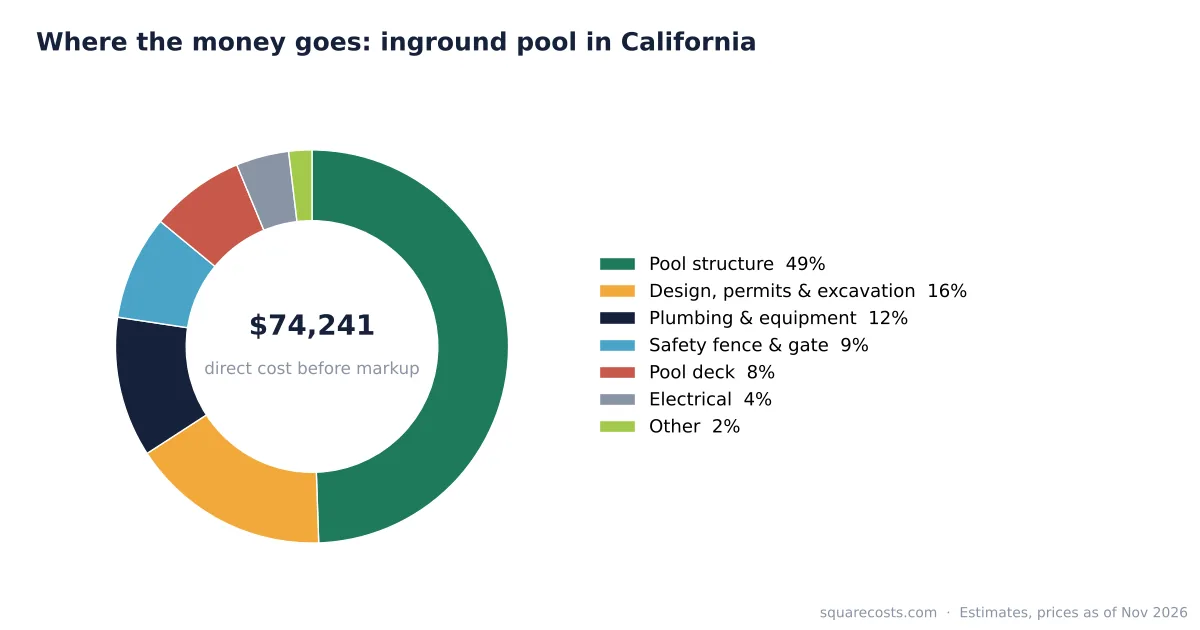
The final price adds 10% contingency for surprises, 15% contractor overhead and profit, and sales tax on materials. A quote far below the estimate usually leaves something out, so ask for an itemized scope in writing.
Labor rates in California
These are the trades and hours behind the estimate. The wage is the state average from the BLS Occupational Employment and Wage Statistics; the installed rate is what a contractor typically bills per hour.
| Trade | Hours | Avg. wage / hour | Installed rate / hour |
|---|---|---|---|
| Cement mason / concrete finisher | 114 | $34.09 | $68.18 |
| Brick / block mason | 58 | $35.15 | $70.30 |
| Ironworker / welder | 40 | $38.91 | $77.82 |
| Construction laborer | 32 | $31.19 | $62.38 |
| Plumber | 32 | $39.58 | $79.16 |
| Fence erector | 26 | $28.07 | $56.14 |
| Equipment operator | 22 | $45.19 | $90.38 |
| Electrician | 16 | $41.28 | $82.56 |
Local factors that change the cost to build a pool in California
Climate, soil and local code change what has to be built in California, and therefore what it costs:
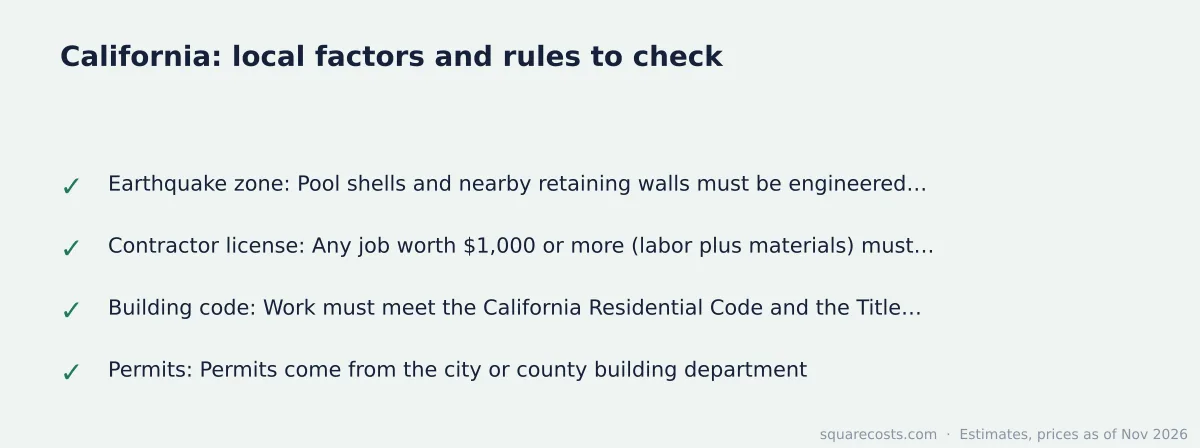
- Earthquake zone. Pool shells and nearby retaining walls must be engineered for seismic loads.
Permits and contractor licensing in California
- Contractor license. Any job worth $1,000 or more (labor plus materials) must be done by a contractor licensed by the Contractors State License Board (CSLB). Check the license number on the CSLB website before signing.
- Building code. Work must meet the California Residential Code and the Title 24 energy standards (2025 edition in effect since January 1, 2026), including seismic and, in fire-hazard zones, wildland–urban interface rules.
- Permits. Permits come from the city or county building department; remodels that add electrical circuits, move plumbing or change structure need one. Energy-code (Title 24) compliance forms are often required.
Rules change, and cities often add their own requirements. Confirm with your local building department before work starts, and keep copies of the permit and final inspection: buyers, lenders and insurers ask for them.
What the estimate includes and leaves out
The cost to build a pool in California in this guide covers:
- Design, permits and excavation
- Concrete (gunite) shell with rebar
- Plaster interior finish and waterline tile
- Pump, filter, plumbing and skimmers
- Electrical work and bonding
- Concrete pool deck around the pool
- Code-required safety fence and self-closing gate
- Start-up chemicals and first fill
Budget separately for:
- Screen enclosure or pool cage
- Heater, salt system, automation and lighting upgrades
- Landscaping, outdoor kitchen and extra decking
- Removing rock or hauling large amounts of soil
- Higher insurance premiums and yearly maintenance
How to lower the cost
- Fiberglass or vinyl liner pools cost less up front than gunite, but have size and lifespan limits.
- Keep the deck small at first; it can be extended later.
- Choose a variable-speed pump; it costs more but saves on electricity every month.
- Build in the off-season when crews have openings.
- Check setback, easement and HOA rules before design to avoid redesign fees.
- A simple rectangle costs less to dig, form and cover than a freeform shape.
Before hiring, compare at least three written quotes against your itemized California estimate. Ask each contractor for a license number, proof of liability insurance and workers’ compensation, and a payment schedule tied to finished work, not dates.
Running costs after the build
Budget for the pool you will own, not just the one you build. Electricity for the pump, chemicals, cleaning and opening/closing typically run $1,000 to $3,000 a year, more with a heater. A variable-speed pump and a cover cut both energy use and evaporation.
A pool also changes insurance: most insurers want a code-compliant fence with a self-closing, self-latching gate, and many recommend raising liability coverage. Check with your agent before the design is final, because the rules can change what you build.
Timeline and planning
A gunite pool usually takes 8 to 12 weeks from excavation to swimming, plus 2 to 8 weeks for design, HOA approval and permits. Rain, inspections and curing time add to the schedule.
For more context, see the swimming pool cost calculator, all California construction and remodeling costs. Our construction cost index shows how California compares across 23 project types.
- Cost to build a house in california
- Roof replacement cost in california
- Bathroom remodel cost in california
How we calculate these numbers. Every figure on this page comes from the SquareCosts calculators, which price each project line by line: materials adjusted for regional prices and inflation, labor hours multiplied by local trade wages, equipment, disposal and permits, then 10% contingency, 15% contractor overhead and profit, and sales tax on materials. Wages come from government statistics agencies and are re-checked every month. The California estimate assumes a 32 × 16 ft concrete (gunite) pool, about 19,000 gallons, with a concrete deck and safety fence. See our data sources for details. These are planning estimates, not quotes: always get written quotes from licensed contractors.
Frequently asked questions
How much does an inground pool cost in California in 2026?
About $103,034 for the standard project (a 32 × 16 ft concrete (gunite) pool, about 19,000 gallons, with a concrete deck and safety fence). Most quotes fall between $90,670 and $118,489.
Why is California more expensive than the U.S. average?
California is 13% above the national average of $91,082. The difference comes mainly from local wages (a carpenter earns about $37.89 per hour), regional material prices and the 7.25% sales tax on materials.
Do I need a licensed contractor in California?
Any job worth $1,000 or more (labor plus materials) must be done by a contractor licensed by the Contractors State License Board (CSLB). Check the license number on the CSLB website before signing.
Do I need a permit in California?
Permits come from the city or county building department; remodels that add electrical circuits, move plumbing or change structure need one. Energy-code (Title 24) compliance forms are often required. Ask the contractor to pull the permit in their own name.
How long does the project take?
A gunite pool usually takes 8 to 12 weeks from excavation to swimming, plus 2 to 8 weeks for design, HOA approval and permits. Rain, inspections and curing time add to the schedule.